Spotting a coyote on the edge of a neighbourhood field, or even crossing a residential road during the night is not an uncommon sight for many residents in Oakville, Milton and Halton Region. In fact, in the last few decades coyotes have been moving deeper into these urban spaces as our communities have expanded into their natural habitats.
Although coyotes are naturally wary of humans, they are incredibly opportunistic animals. As their natural territories have shrunk, they’ve quickly adapted to find their means of survival in our urban environments. Parks, ravines, golf courses, and other green spaces allow them to move through our communities with ease. Coyotes have also learned that residential areas also offer easy access to food, water, and shelter.
In recent years, coyotes have learned to thrive alongside people by taking advantage of the same natural features that support many other animals in our communities. Streams, creeks, stormwater ponds and wooded areas throughout the region provide water and shelter for coyotes, but also for raccoons, rabbits, skunks, squirrels and deer that residents commonly spot.
Although coyotes usually hunt small mammals and forage for wild foods, our backyards can unintentionally offer tempting resources, especially to mothers and newborn pups.
Common attractants found around your home may include:
- Pet food left outdoors
- Water bowls left outside overnight
- Bird feeders and spilled seeds
- Fallen fruit beneath trees and vegetable gardens
- Compost piles
- Unsecured garbage and recycling
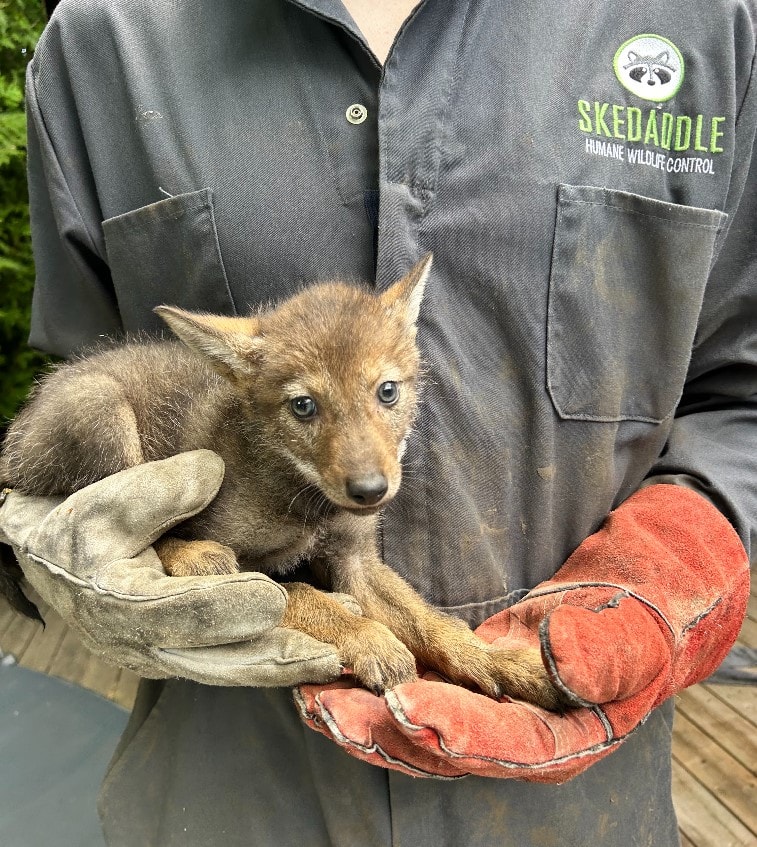
Early this summer, the team at Skedaddle Humane Wildlife Control responded to a call involving six coyote pups that had established a den beneath a residential deck. While situations like this are uncommon, they demonstrate that backyards can sometimes provide quiet, sheltered spaces where coyotes may choose to den and raise their young. Potential denning locations can include:
- Beneath decks and porches
- Under sheds and detached garages
- Dense shrubs and overgrown vegetation
- Wood piles and brush piles
- Spaces beneath additions, stairways or elevated structures
The good news is that conflicts with coyotes can often be prevented. By removing attractants and securing vulnerable areas around the home, residents can help keep coyotes wild and reduce the likelihood of unwanted encounters.
What Homeowners Can Do:
- Never intentionally feed coyotes. Feeding wildlife causes animals to lose their survival instinct to steer clear from threats like traffic, and can lead to unwanted encounters.

- Remove food attractants. Keep garbage secured, bring pet food indoors, clean up fallen fruit, and consider removing bird feeders if coyotes are frequently seen nearby.
- Supervise pets outdoors. Keep cats indoors and walk dogs on a leash, particularly during dawn and dusk when coyotes are most active.
- Eliminate water sources when possible. Empty standing water and avoid leaving pet water bowls outside overnight.
- Maintain your yard. Trim overgrown vegetation and remove brush piles that could provide cover for wildlife.
- Block access beneath decks and sheds. These spaces can offer ideal denning locations for coyotes and other wildlife. Professional wildlife-proofing can help prevent animals from settling underneath structures.
- If a coyote approaches too closely, make yourself appear large, wave your arms, shout loudly, or make noise to encourage it to move away. Never run.
Coyotes are a natural part of our communities and play a vital role in a thriving ecosystem. Encounters are becoming more common as our communities continue to grow
deeper into rural spaces. By removing attractants and securing potential denning sites, homeowners can help ensure that people, pets, and wildlife coexist safely.