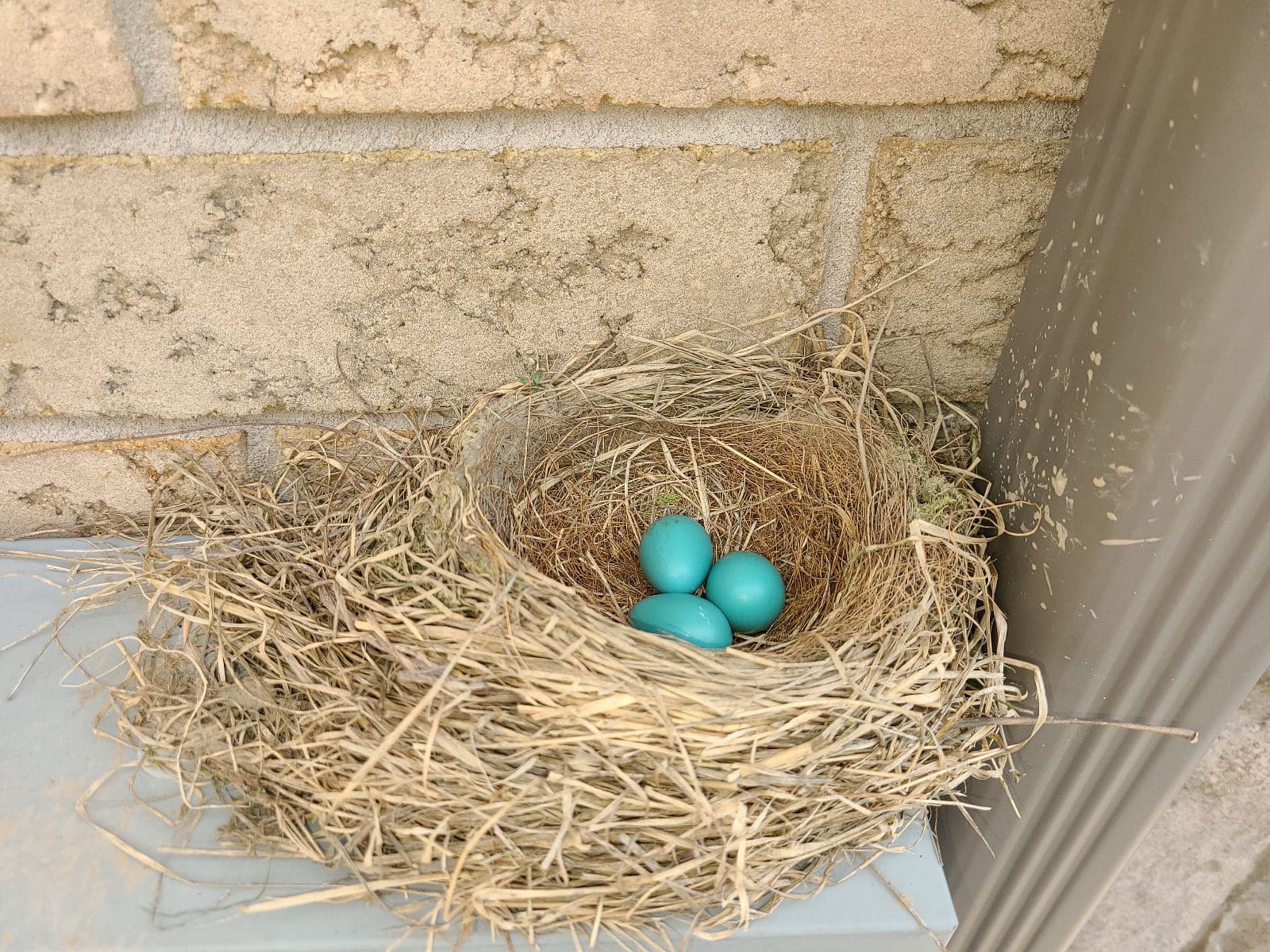
Our friends at Skedaddle Humane Wildlife Control commonly receive calls from early spring to late summer reporting robins nesting on customer’s properties. In the Halton region, robins in spring are a backyard staple, usually stopping by to hunt for worms or gather materials for their nests. However, occasionally they decide to stay and build their cement-like nests directly on a home or shed.
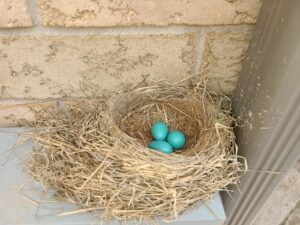
It’s very important to take early steps at the first signs of spring to prevent robins from nesting on your property. Knowing where they nest, and what to do if a nest is already in
place, make all the difference in keeping both your space and the animals, including their babies, safe.
Common areas to watch out for robins on your property include:
- Covered ledges and porches
- Exterior light fixtures
- Roof and soffit intersections
- Under awnings or overhangs
Preventing Nesting Before It Begins
The best time to address robin activity is before a nest is fully built. Robins are drawn to sheltered areas that resemble natural stone ledges or branches, which is why homes
often provide ideal nesting spots.
Homeowners should watch for early signs of activity and take preventative steps such as:
- Covering exterior light fixtures where birds often perch and build
- Installing bird deterrents along eavestroughs and ledges
- Blocking access to covered areas like porches or awnings
- Cleaning debris, such as twigs and leaves, from nearby areas
By addressing these areas early, homeowners can gently encourage robins to choose more suitable, long-term nesting locations in nearby trees or shrubs—where they are safer and less exposed to human activity.
Removing early signs of a nest beginning to form, such as small piles of sticks and grass, can help discourage the robin from bringing more materials to that area and settling in.
What to Do Once Nesting Has Started
If you’ve seen a robin has already created a nest on your property, it’s important to leave it undisturbed. In Canada, interfering with or removing an active robin’s nest is illegal under federal law. Attempting to move a nest can also put eggs or hatchlings at serious risk.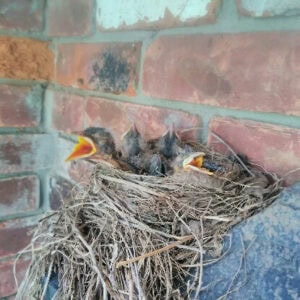
Here’s how to know if a nest is established:
- A nest is considered established once it has a defined structure and remains in place, even if no eggs are present yet
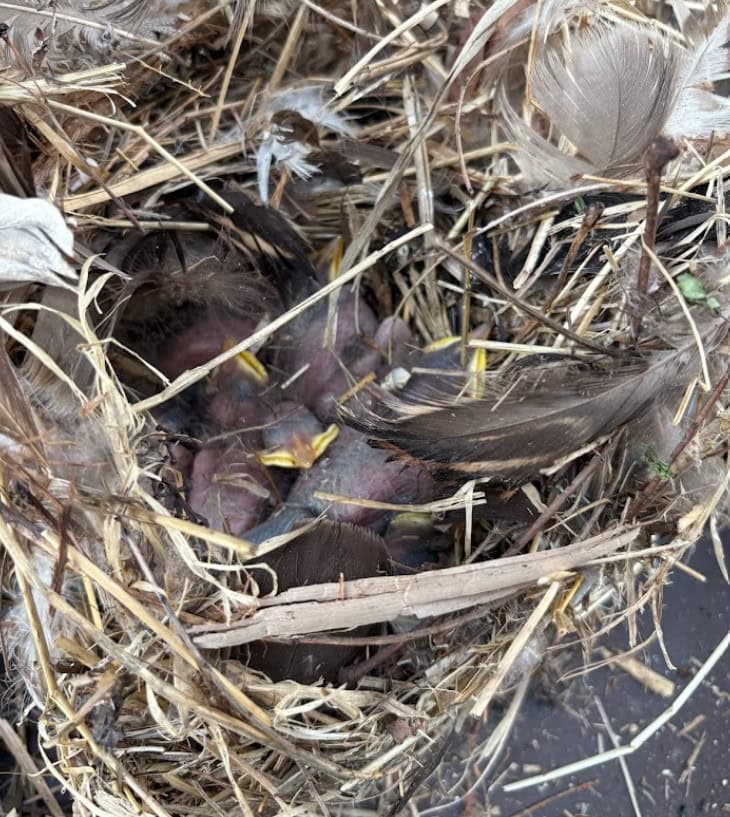
- Any nest containing eggs or baby birds is active and must be left alone until the young have naturally left
While it may be inconvenient, robin nesting periods are typically short-lived. The babies and their parents will only remain in the nest for a few weeks before moving on to another location.
Living with Robins on Your Property
If a nest is located in a high-traffic area of your property, the best approach is to give the birds space and avoid the area as much as possible until they leave.
In rare cases where assistance may be needed, homeowners should seek help if:
- The adult robin appears injured or unable to fly
- A baby bird has fallen from the nest and has not been attended by the mother for several hours
If you are unsure what to do with a robin’s nest or baby robin on your property, please contact the Humane Society of Oakville, Milton and Halton, at 905-845-1551 and we can provide guidance.
For homeowners dealing with recurring bird activity year after year, professional prevention may be the best solution. The team at Skedaddle Humane Wildlife Control specializes in humane bird removal and exclusion, helping to protect homes from busy robins during the spring and summer season, while prioritizing the safety of the animals involved. Taking proactive steps now can help reduce future issues—creating a safer environment to coexist peacefully with wildlife in your community.