By Jessica Hanson, Content Specialist, Skedaddle Humane Wildlife Control
Finding a baby bird on the ground can be concerning, and most people’s first instinct is usually to pick it up and help. However, not every baby bird needs human intervention. It is important to take the time and assess the situation before stepping in. Our friends at Skedaddle Humane Wildlife Control have written a simple guide to use this summer that can help you determine whether a baby bird needs assistance.
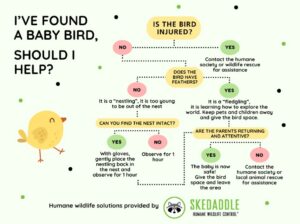
Step 1: Check if the bird is injured.
The first thing to check is whether the bird appears injured. Look for obvious signs such as:
- Visible wounds or bleeding
- A drooping or broken wing
- Difficulty standing or moving
- Laboured breathing
- Being attacked by insects or other animals
If the bird is injured, contact your local humane society, licensed wildlife rehabilitator, or bird rescue organization right away. Avoid trying to treat the bird yourself, as improper handling can cause further harm.
If the bird does not appear injured, move on to the next step.
Step 2: Determine whether the bird is a nestling, or a fledgling.
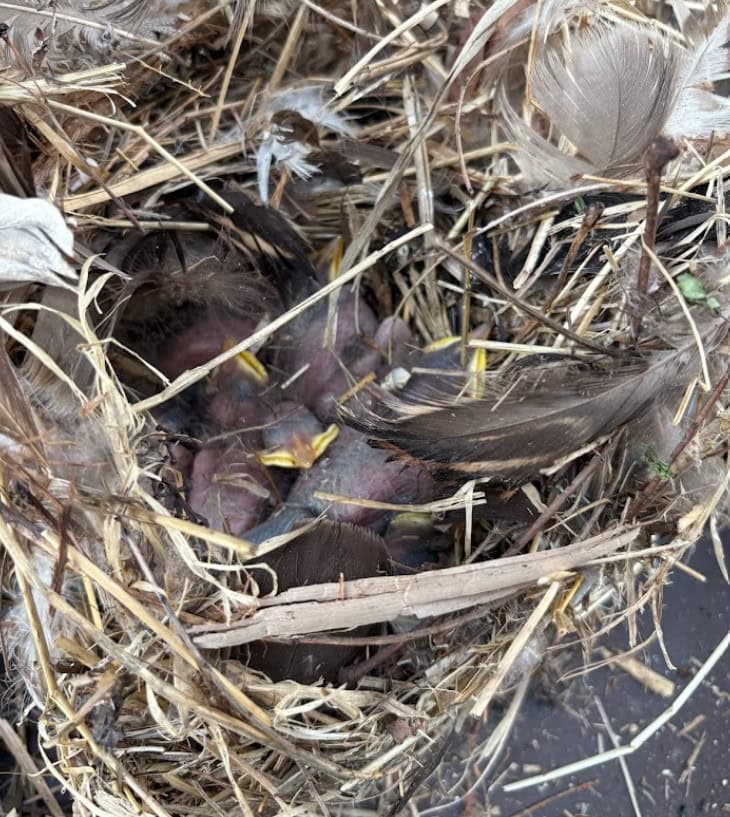
A young bird’s feather development can tell you a lot about whether it belongs on the ground. If the bird does not have feathers (or only sparse fluff), then it is likely a nestling, meaning it is too young to survive outside of its nest and should be returned if possible.
Ask yourself:
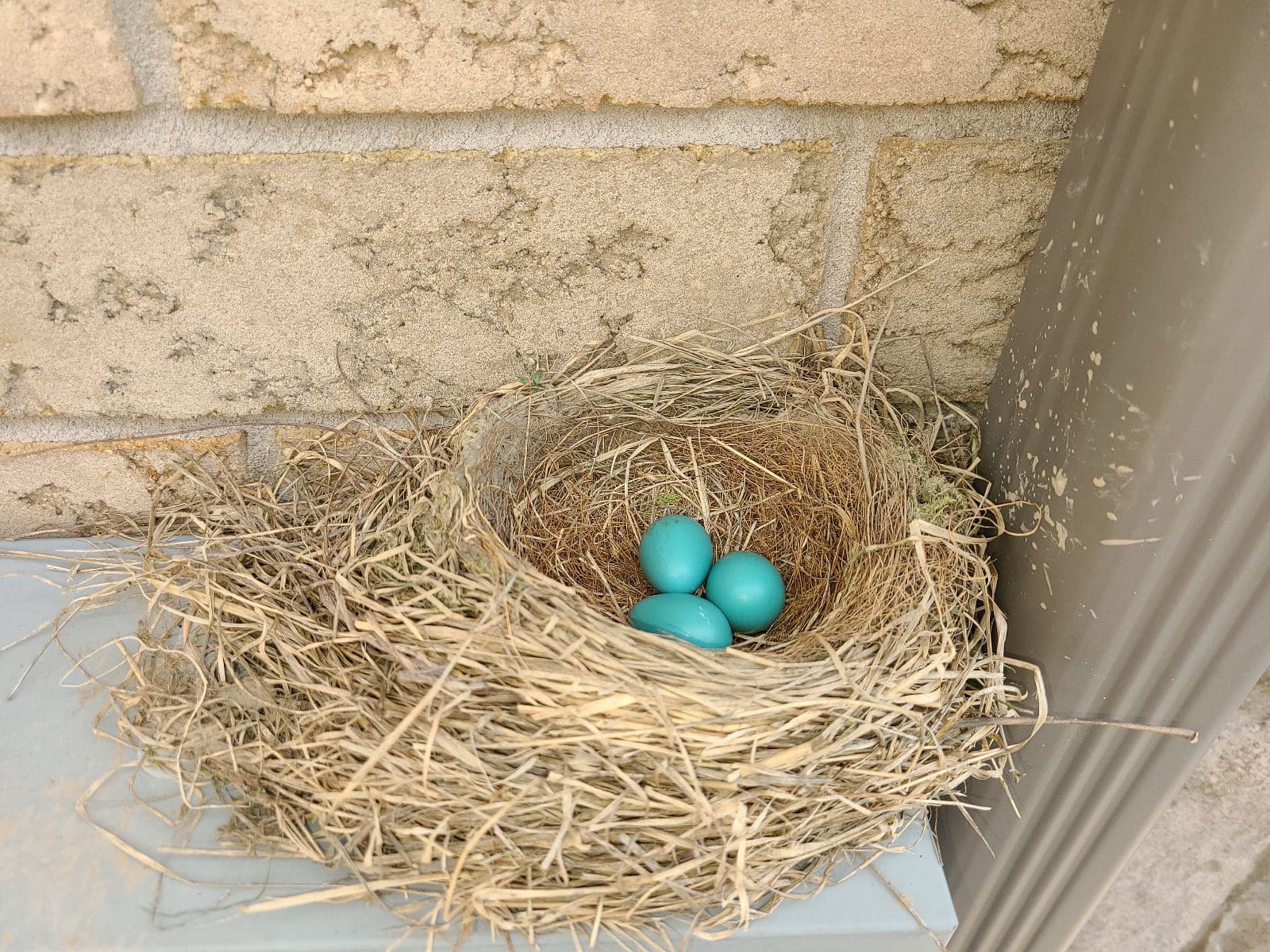
Can you find the nest intact?
- Yes:
Put on gloves and gently place the nestling back into the nest. Contrary to popular myth, parent birds will not reject their babies because of human scent. Once the bird is back in the nest, observe from a distance for about one hour to see if the parents return. - No:
If the nest cannot be found or has been destroyed, monitor the area for about one hour. Mother birds are often nearby and may still return to care for their young. If no mother appears, contact a wildlife rehabilitation centre for further guidance.
If you find a baby bird on the ground with feathers, then it is likely a fledgling. Fledglings are young birds that have recently left the nest and are learning how to hop, flutter, and explore their surroundings. It is completely normal for them to spend time on the ground while their parents continue to feed and supervise them.
In this case:
- Keep pets and children away
- Give the bird plenty of space
- Watch from a distance
Then ask:
Are the parents returning and attentive?
- Yes:
Great news—the baby bird is likely safe. The parents are still caring for it, even if they are not constantly visible. Leave the area and let them continue their work. - No:
If the bird has been alone for an extended period and no parent birds return, contact your local humane society or wildlife rescue organization for advice.
When in Doubt, Observe First
Not every baby bird needs rescuing. In fact, unnecessary intervention can sometimes do more harm than good. Whenever possible, observe from a distance before taking action. By understanding whether the bird is injured, whether it is a nestling or fledgling, and whether its parents are nearby, you can make the best decision to help keep the bird safe.
If you have determined that a baby bird needs help, the team at the Humane Society of Oakville, Milton and Halton can help you with the next steps. If you are experiencing ongoing bird issues around your home or property, Skedaddle’s Oakville team can also provide humane, professional solutions to help keep both your family and local wildlife safe.